Inside Our Masterclass with Pascal Barbot
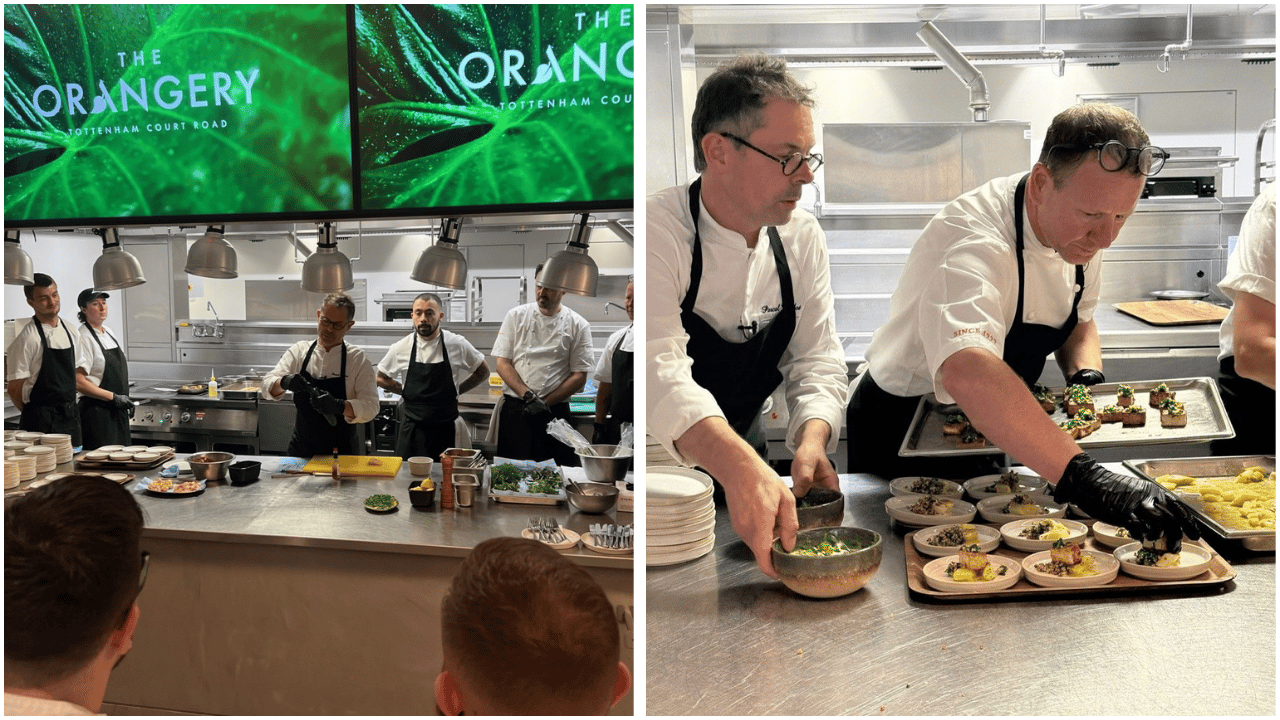
At The Good Eating Company, our food is built around fresh ingredients and refined technique, guided by inspiration from some of the world’s most respected chefs.
Earlier this week our chefs attended a masterclass conducted by Pascal Barbot, the French chef behind the famous L'Astrance in Paris, which held three Michelin stars for over a decade. Since its opening, the restaurant has built a reputation based on ingredient-led cooking where French technique and Asian influence coexist.
The class focused on delivering Asian-inspired dishes using seasonal British produce. It is an approach that sits closely alongside how we think about workplace dining and what sets the best office catering companies in London apart.
Delivering Asian-Inspired Dishes with Seasonal British Produce
With the aim of combining Asian-inspired flavours and approaches with seasonal British ingredients, our team worked through a series of dishes. Our chefs explored different ingredients and methods to create dishes with balance, depth and precision.
This approach reflects a broader philosophy around food that connects naturally with our office catering solutions, where seasonality and ingredient-led cooking guide menu development and influence every dish we serve.
Dishes Explored During the Session
The team worked through dishes that demonstrated how technique and flavour can be layered:
- Sous vide free-range British pork belly glazed with a gochugaru and soy sweet and sour sauce
- Shrimp with a lemongrass, tamarind and coconut satay
- Lacquered tofu with melting sous vide leeks, kasha and a fast-fried leek green and ginger oil
- Free-range British chicken poached in a kombu, morel and sundried tomato dashi with Asian salsa verde
- Jasmine crème brûlée paired with an Earl Grey Gateau Nantais
Each dish highlighted how Asian-inspired flavour profiles can be applied using seasonal British produce, while drawing on classical French technique.
Techniques That Define the Approach
Beyond the dishes themselves, the session was as much about technique as it was about ingredients. Key methods included:
- The Asian technique of beating cucumber to open up the flesh so it better absorbs a pickle
- The Chinese method of fast-frying, where hot oil followed immediately by iced water achieves crispness and freshness in greens
- A philosophy on condiments and sauces, where precision is everything
As Pascal Barbot explained: "A sauce is not a soup, a sauce should be almost unpleasant," emphasising that it should be intensely flavoured, used sparingly, and designed to lift what it accompanies.
From Culinary Ideas into Workplace Catering
Treat moments matter at work. They're how teams pause, connect and bring a little joy back to the day. Our new cookies and soft serve concept takes that everyday indulgence and gives it a craft-led twist. Large, freshly baked cookies are paired with soft serve and customisable toppings. It's playful, premium and designed to create the kind of small moments that make the workplace feel more welcoming.
What This Means for Workplaces and Their People
Sessions like this shape how we think about food in workplace environments. At GEC, we take inspiration from advanced culinary approaches and translate them into practical, considered office catering solutions. The focus is on delivering consistency while still allowing space for creativity and depth of flavour.
Sustainable catering is central to this thinking, with seasonality and responsible sourcing naturally guiding how our menus evolve. Ultimately, it’s about taking ideas from some of the finest restaurant kitchens and adapting them to work for everyday workplace dining.